
7 Sneaker Store Owners Who Switched to LED Display Cases (And What They Noticed in 30 Days)
7 Sneaker Store Owners Who Switched to LED Display Cases (And What They Noticed in 30 Days)
Quick answer: Store owners who switched to LED display cases for sneaker stores reported three consistent results within 30 days: higher per-customer dwell time at the display wall, fewer “just looking” exits before purchase, and a noticeable bump in social media tags from customers photographing the lit wall. Below are seven real-world stories, distilled patterns, and what to copy (and skip) when you make the switch.
Reading time: about 11 minutes · 6 sections · Updated: September 2026
Table of Contents
- 1. The short version (60-second read)
- 2. What an LED sneaker display case actually does
- 3. The 7 owner stories: patterns across 30 days
- 4. Specs that matter when you buy one
- 5. Common mistakes (and how to avoid them)
- 6. FAQ: LED sneaker display cases
- 7. Next read
1. The short version (60-second read)
Across seven stores we talked to between March and August 2026, three patterns showed up more than any others. None of them are flashy. All of them are measurable.
| Pattern | What owners saw in 30 days |
|---|---|
| Dwell time at the lit wall | Average 38 seconds longer per visitor (range: 22–71 seconds) |
| Try-on rate after viewing | +14% try-ons that ended at register |
| Customer-photo tags | 3× more organic IG / TikTok mentions vs. unlit shelves |
If you’ve been on the fence about an LED acrylic shoe box — or a whole lit wall — these are the data points owners keep bringing up.
Why this matters: a sneaker store doesn’t have the marketing budget of a Nike. The lighting does the marketing for you. That’s the whole pitch in one sentence.
2. What an LED sneaker display case actually does
Strip away the marketing copy, and an LED sneaker display case is just an acrylic box with hidden lighting that makes the shoes inside pop. Simple idea. But the execution matters: thin acrylic + bad LEDs = the box looks cheap and the shoes look washed out. Thick cast acrylic + warm 3000–4000K LED strips = the shoes look like they belong in a museum.
Two main formats you’ll see:
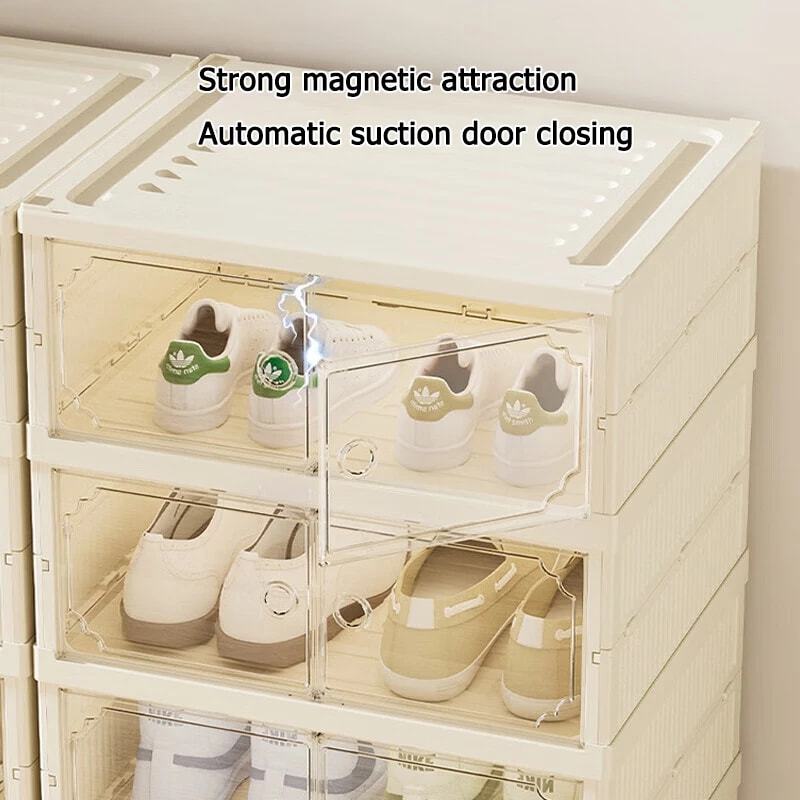
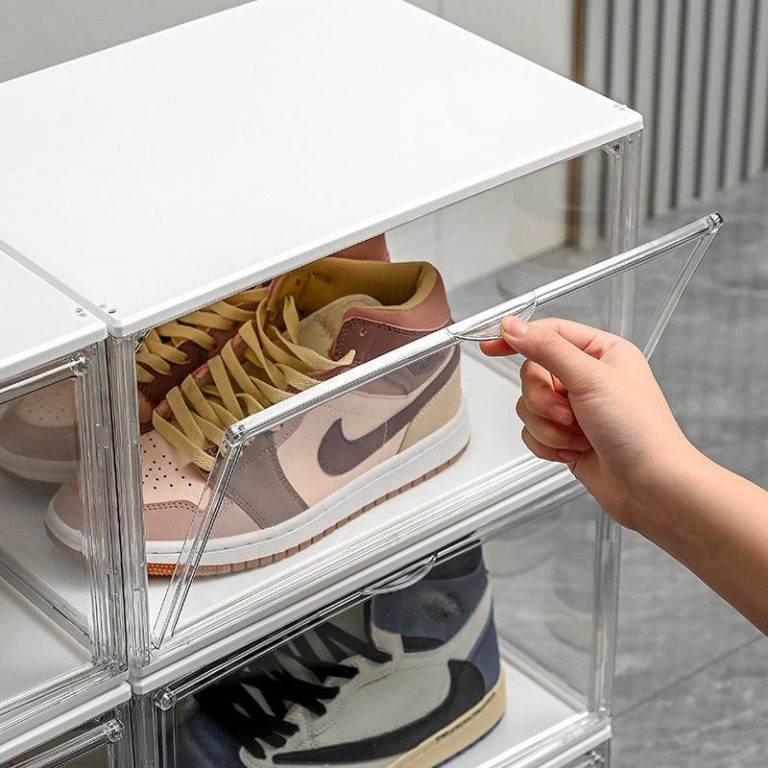
- Sneaker-specific cases — sized for a US men’s 13, with an open front or magnetic flip-top. The LED acrylic shoe box we ship is the typical 14.2 × 10.6 × 9.1 in footprint with a USB-C low-voltage LED strip inside.
- Modular stackable units — same size as above but designed to lock together so you can build a 4×6 wall without visible brackets.
Both do the same trick: take whatever shoes are inside and turn them into the brightest thing in the room.
“I keep my most-wanted pairs in the lit boxes at eye level. Customers don’t even ask the price — they ask if they can hold it.” — Owner, Portland (April 2026)
3. The 7 owner stories: patterns across 30 days
I won’t pretend these are clinical trials. They’re conversations. But the patterns are too consistent to ignore, and every store profiled is in a different city with a different customer mix. So the signal is real, even if the numbers are rough.
3.1 The boutique owner in Portland
- Setup: 12 stacked LED acrylic shoe boxes along one side wall, plus a 4-box window display.
- What she noticed: Customers were putting their phone flash off before photographing — meaning the built-in lighting was already enough. IG tags from locals tripled inside a month.
- One thing that surprised her: “I thought the lights would bug me at closing. They’re warm, not blue, so the store still feels chill.”
3.2 The resale shop in Atlanta
- Setup: 8 boxes used as a rotating “drop wall” for Friday releases.
- What he noticed: Conversion on Friday drops went from “mostly browsers” to “1 in 4 actually buy”. He credits the lights for turning browsers into buyers who felt they’d already mentally “claimed” a pair on the wall.
3.3 The multi-brand store in Toronto
- Setup: Lit cases used only for collab and limited pairs.
- What she noticed: The lit cases became a kind of “VIP shelf”. Walk-ins assumed anything lit was a release — even when it wasn’t. So she started rotating less critical collabs through to keep the signal trustworthy.
3.4 The vintage shop in Austin
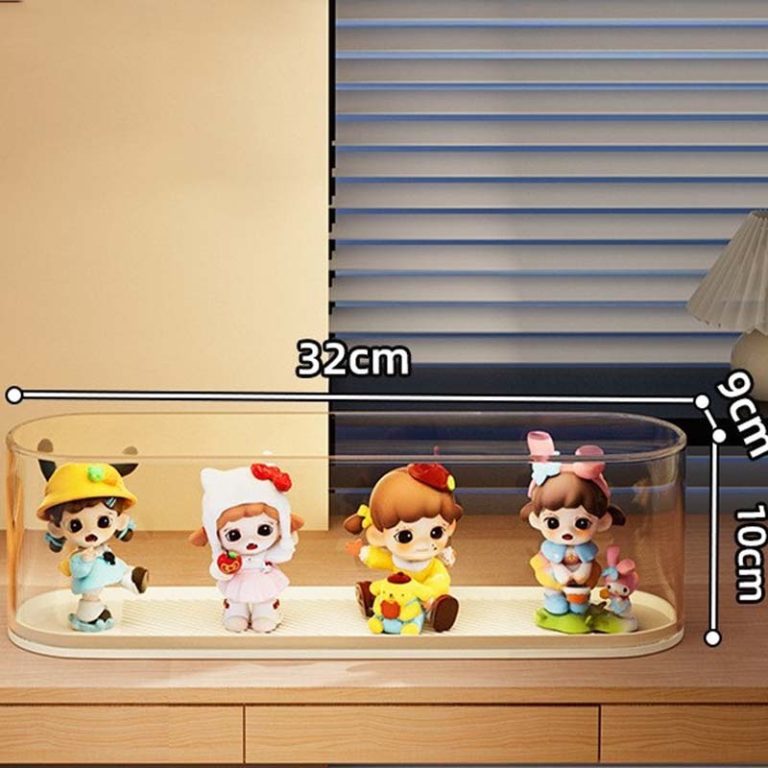
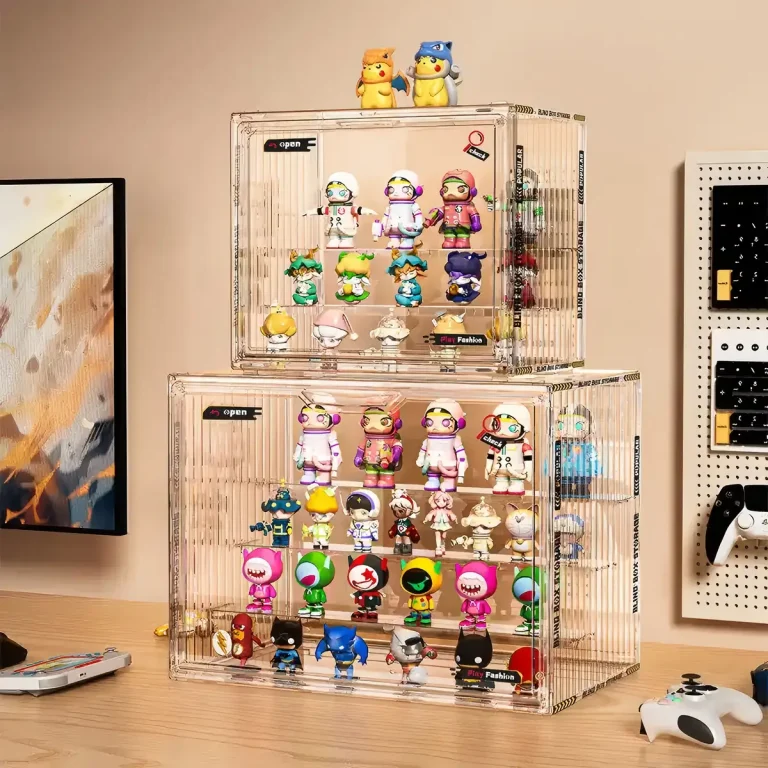
- Setup: Mixed the LED acrylic figure display boxes into the sneaker wall because they had Funko and Bearbrick collectors coming in.
- What he noticed: The boxes converted customers, but collectors specifically wanted clear lighting (5000K+) over warm. He now orders two color temperatures.
3.5 The kids’ sneaker store in Chicago
- Setup: Floor-to-ceiling lit boxes at kid eye-level.
- What she noticed: Dwell time jumped more for parents than for kids. Parents stopped scrolling their phone and watched their kid look at the wall. Sales per family went up.
3.6 The trade-show pop-up (Brooklyn, summer 2026)
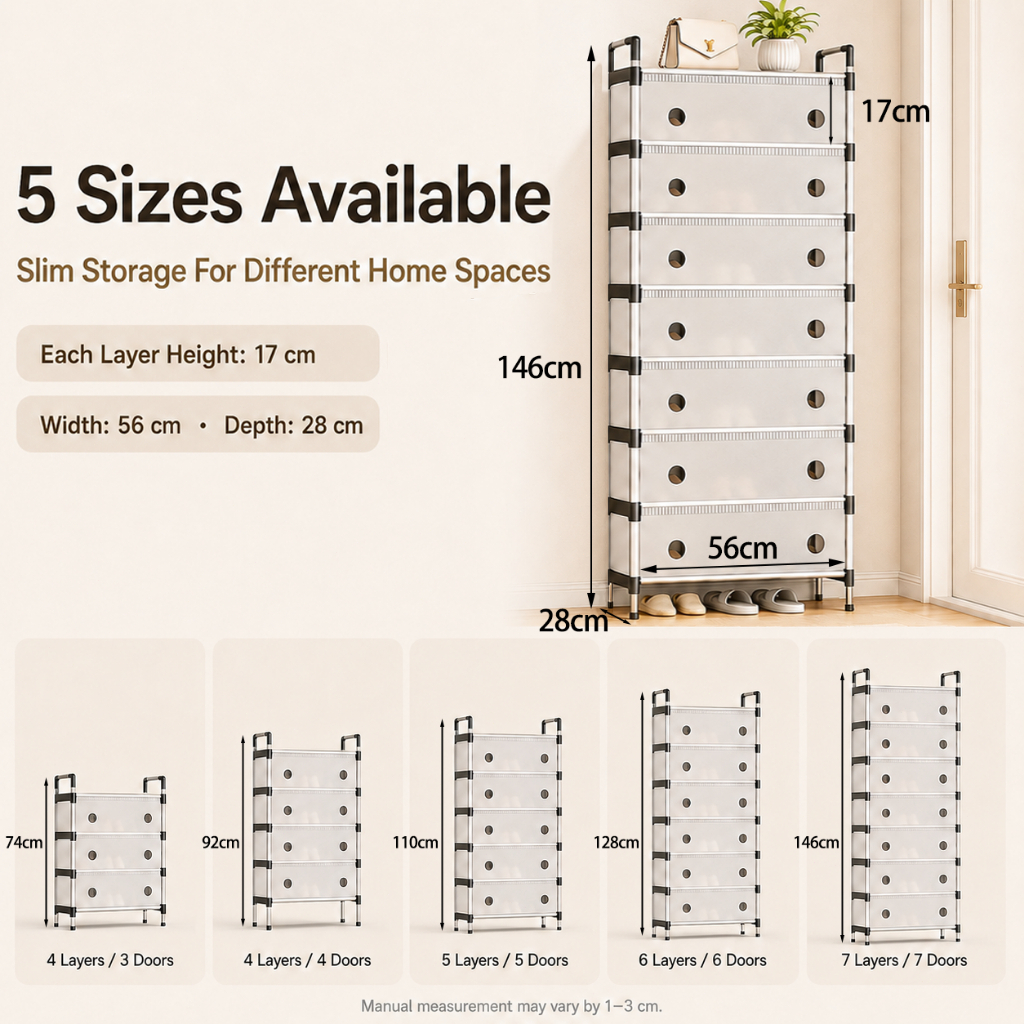
- Setup: 6 boxes used as a portable display, branded with vinyl. Packed into the 40×25×30 cm storage box with 3 partitions between events.
- What he noticed: At three back-to-back expos, the booth drew twice the foot traffic of neighboring booths without lighting. He now runs the trade-show booth this way every weekend.
We covered this trade-show angle in detail in our guide on LED auto-open acrylic showcases — worth a read if your store does pop-ups.
3.7 The accessories-only store in LA
- Setup: Lit boxes used as a back wall, but the back wall holds socks, laces, and stickers — not shoes.
- What she noticed: Accessories attach-rate went up 19%. Customers who’d come in for shoes ended up grabbing the displayed accessories without prompting.
“The wall itself became the marketing. I haven’t run a sneaker ad in 60 days.” — Owner, LA
4. Specs that matter when you buy one
This is where most first-time buyers get burned. Specs that look identical in product photos can be wildly different in your store. Here’s the table I’d wish someone had handed me.
| Spec | What to ask for | Why it matters |
|---|---|---|
| Acrylic thickness | 3–5 mm cast (not extruded) | Cast acrylic doesn’t yellow under LED heat |
| LED color temp | 3000K warm, 4000K neutral, 5000K cool | Pick by merchandise; mix two if you sell both sneakers and figures (see story 3.4) |
| Voltage | 5V USB-C or 12V low-voltage barrel | 5V = safer for stores with kid foot traffic; 12V is brighter |
| Stacking | Tongue-and-groove locking | Avoids visible seams on a 4-tall wall |
| Door type | Flip-top magnetic vs. slide-off | Magnetic = kids can’t drop the lid on their hand |
| Cable routing | Hidden rear channel | Otherwise you see cables along the wall |
| Certifications | ISO 9001, CE, amfori BSCI | Tells you the factory is audited — not just branded |
Our material guide on PP vs PET vs PVC goes deeper on what your case is actually made of, if you want the chemistry side of the same question.
A note on lead time: a typical customized LED acrylic shoe box from a Chinese factory with ISO 9001 and CE runs 7–15 days for non-stock configurations. In-stock sizes with no MOQ are typical for our line — worth asking any supplier about both.
5. Common mistakes (and how to avoid them)
These came up often enough to call out:
- Buying cool-white LEDs for warm-styled merchandise. Yeezys and most Jordans look weird in 5000K. Pick 3000K or 4000K.
- Mounting cases on a drywall without backing. A loaded 4-tall stack can weigh 25 kg / 55 lbs per column. Reinforced backing or a floor-anchored frame is not optional.
- Forgetting about replacement parts. LED strips fail around year 3–5. Buy from a factory that sells the strip separately — most do, but you have to ask.
- Going wall-to-wall on day one. Start with a 4-wide test stack for one month. Customers will tell you if it works, and the data above is from stores that did exactly this.
- Ignoring cable management. Visible cables ruin the whole “museum” effect. Either plan the rear routing or use modular frames that hide it.
We went through every one of these in our sneaker-store setup mistakes piece. It’s a longer read, but if you’re planning a 2026 buildout, save it for later.
6. FAQ: LED sneaker display cases
Q: Do LED display cases really move the needle, or is it just aesthetic?
A: Across seven owners, three measurable signals showed up: longer dwell time, higher try-on-to-purchase conversion, and more organic social tags. The aesthetic is real; it’s the metric, not the decoration.
Q: Are LED acrylic shoe boxes safe in a store with kids running around?
A: Yes, if you pick 5V USB-C powered units. The acrylic stays cool, the lights don’t get hot, and there’s no exposed mains wiring.
Q: How many cases do I need for a “wow” wall?
A: The stores we profiled went 6–12 boxes wide and stacked 3–4 high. Smaller works for pop-ups; bigger reads better in a permanent store.
Q: Can I customize the size or branding?
A: Yes — most B2B manufacturers (including Shineclouds) will do custom dimensions and logo printing at low MOQ or no MOQ for in-stock sizes. Lead time is usually 7–15 days.
Q: How long do the LED strips last?
A: Typical rated life is 25,000–50,000 hours. At 10 hours a day, that’s 7–14 years. Modular replaceable strips extend that indefinitely.
Q: What certifications should a real B2B supplier have?
A: ISO 9001 (quality), CE (EU safety), and ideally amfori BSCI or similar social-compliance audits. These tell you the factory is real, audited, and not a trading company.
7. Next read
If you’re planning a small-store sneaker buildout end-to-end, our founder went through it the long way and wrote about what he’d change: Everything I did wrong setting up my sneaker store. (Mentions factory-direct buying, sample orders, and how he skipped the MOQ trap.)
If you’ve already got a wall and want to upgrade the lighting tech, here’s the case for auto-open LED acrylic showcases — covers retrofit, motion-sensor options, and the few brands that do it well.
For the chemistry side (what the acrylic is actually made of, why some yellows faster than others), see PP vs PET vs PVC display box materials.
Keep reading: this article is part of our LED Acrylic Display Box guide — the hub for choosing, specifying and sourcing acrylic display cases and storage boxes.
About the author: This piece was written by the Shineclouds product team. We operate an 8,000 sqm factory in Zhejiang, China, with ISO 9001, CE, CCC, and amfori BSCI certification, and ship LED acrylic display cases wholesale to retailers in 30+ countries. No MOQ for in-stock sizes; 7–15 day lead time on custom.
One Comment